It can be quite unsettling to see your garage door open on its own — especially when you’re certain no one pressed the remote. While it might seem mysterious, this strange occurrence usually has logical explanations. From misaligned sensors to power surges, understanding the root causes can help you prevent your garage door from operating unexpectedly and keep your home secure.Let’s explore the most common reasons your garage doors open automatically, how to fix them, and when to call a professional.
Content
1. Garage Door Open Due to Misaligned or Faulty Safety Sensors
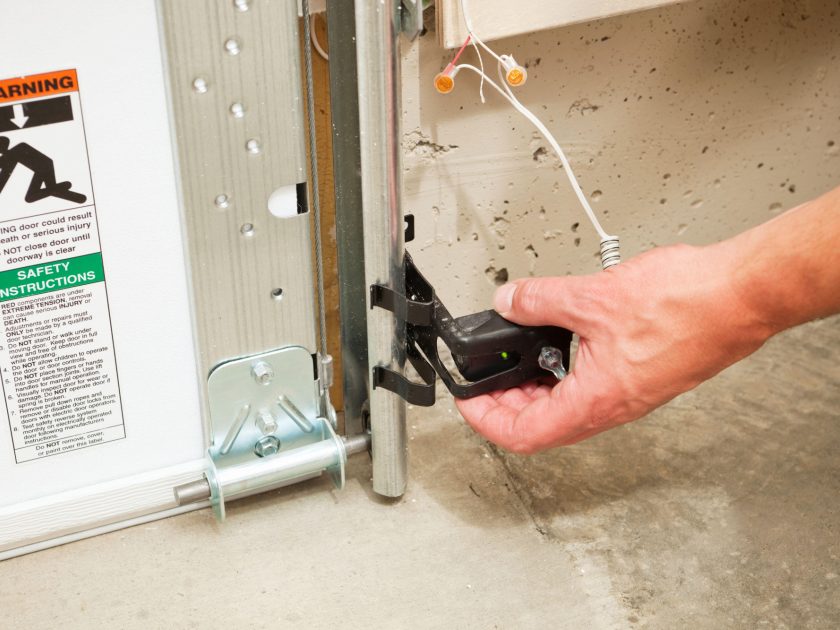
Modern garage door open systems come with photoelectric sensors designed to prevent accidents by stopping the door from closing on a person, pet, or object. These sensors emit an invisible infrared beam across the base of the garage opening. When the beam is interrupted, the system assumes something is blocking the path and automatically reverses the door. However, if the sensors become dirty or misaligned, they can misread signals, making your garage door open unexpectedly or refuse to close properly.
How to fix it:
Check that both sensors are facing each other directly.
Clean the lenses with a soft cloth to remove dust or cobwebs.
Ensure nothing is blocking the path between them.
If the problem persists, the sensors themselves may be damaged and require replacement.
2. Electrical or Circuit Board Issues
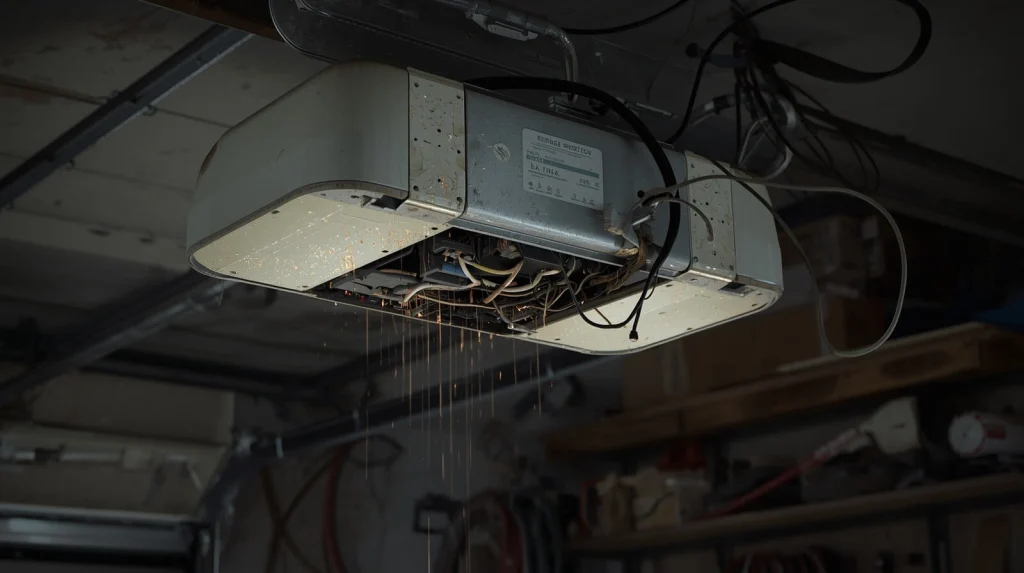
A power surge or faulty circuit board is another frequent culprit behind a garage door opening unexpectedly. The circuit board inside the opener controls the signals sent from your remote or wall switch. If it becomes damaged, the opener may misinterpret electrical noise as a signal to open.Power surges often occur after storms or power outages. Even small fluctuations in your home’s electrical system can affect the opener’s logic board.
How to fix it:
Unplug your garage door opener for a few minutes, then plug it back in to reset it.
If the issue continues, the circuit board may need to be replaced by a professional.
Consider using a surge protector on your opener to prevent future damage.
3. Radio Frequency Interference (RFI) or Crossed Signals
Garage door openers operate on specific radio frequencies. Sometimes, nearby devices — such as car alarms, wireless doorbells, or even your neighbor’s garage door remote — can interfere with these frequencies, causing your garage door to open without any direct input.In rare cases, older garage door systems that lack rolling code technology may even respond to someone else’s remote.
How to fix it:
Reprogram your opener and remotes with a new frequency.
Upgrade to a newer opener with rolling code technology, which changes the access code each time you use it.
Move or unplug nearby wireless devices temporarily to test for interference.
4. Faulty Wall Switch or Remote Control
A stuck button on your wall switch or remote can send continuous signals to your opener, making the garage door open randomly. Over time, dirt or moisture can cause buttons to stick, and internal circuits can wear out.
How to fix it:
Inspect your remote for stuck buttons or corrosion on the battery terminals.
Replace the batteries regularly to prevent weak signals from misfiring.
Test your wall switch by disconnecting it temporarily; if the door stops opening unexpectedly, you’ve found your problem.
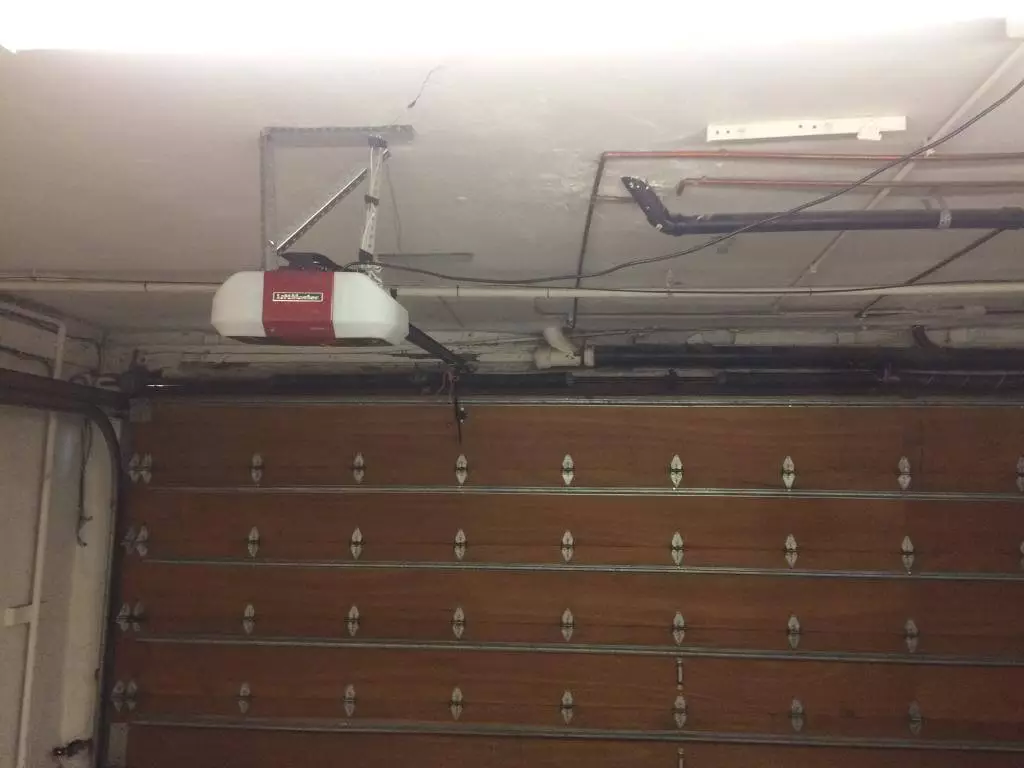
5. Damaged or Worn Opener Motor
The motor unit inside your garage door opener works hard every time you use it. If it’s old or damaged, electrical shorts or mechanical failures can cause it to behave unpredictably — including making the garage doors open on its own.This issue is more common in systems over 10 years old or those that haven’t been serviced regularly.
How to fix it:
Listen for grinding or humming noises from the motor.
If the motor is overheating or not responding properly, it’s best to replace the entire opener.
Schedule regular maintenance to keep the opener lubricated and running smoothly.
6.Interference from Nearby Devices or Electromagnetic Fields
Electromagnetic interference (EMI) can also be to blame. This occurs when electronic devices emit signals that interfere with the opener’s operation. Common culprits include:
Microwave ovens
Hair dryers
Baby monitors
Wireless routers
Smart home devices
When these devices are operating near your garage, they might cause erratic signals that make the garage door open without reason.
How to fix it:
Identify and relocate or unplug interfering devices.
Shield the opener’s wiring using proper insulation.
In severe cases, consult an electrician to test for EMI sources.
7. Animals or Obstructions Triggering Sensors
It might sound odd, but small animals like birds, rodents, or even insects can cause your garage door to open by interfering with the safety sensors. Cobwebs, dust, or flying insects crossing the sensor beam can trick the system into thinking there’s an obstruction.
How to fix it:
Regularly clean the sensor area and clear any nests or debris.
Install protective covers around the sensors to minimize false triggers.
Make sure lighting near the sensors isn’t too bright, as strong sunlight can also cause false readings.
8. Neighbor’s Remote or Old Code Conflicts
If you have an older opener model that doesn’t use rolling codes, it’s possible your neighbor’s remote operates on the same fixed frequency. This means when they press their button, it might accidentally make your garage door open too.
How to fix it:
Reprogram your remote and opener to use a new frequency.
Replace outdated systems with modern openers featuring secure rolling code technology, which prevents code duplication.
9. How to Prevent Your Garage Door from Opening by Itself
Taking proactive measures can minimize the risk of future malfunctions:
Perform monthly sensor and balance tests.
Keep the tracks, rollers, and springs clean and lubricated.
Check your opener’s wiring for damage or loose connections.
Disconnect the opener during extended vacations.
Schedule annual maintenance with a trusted garage door repair professional.
10. When to Call a Professional
If you’ve tried these troubleshooting steps and your garage door opens randomly, it’s time to contact a professional technician. An expert can test the electrical components, inspect the circuit board, and ensure that all safety mechanisms are functioning properly.Local professionals — such as Garage Door Opener Repair Chester — specialize in diagnosing and repairing complex opener issues quickly and safely.
Final Thoughts
When your garage door opens by itself, it can be both frustrating and concerning. While minor sensor misalignments or interference issues can often be fixed easily, electrical faults or worn motors require professional attention.Understanding these causes helps you stay safe, protect your property, and ensure your garage door system operates smoothly. Regular maintenance, timely repairs, and modern technology upgrades can go a long way in keeping your garage doors open only when you want it to.
FAQs
Are garage doors easy to open?
Most modern garage doors are easy to open thanks to automatic openers and balanced springs that reduce the effort needed to lift the door.
What are the three types of garage door openers?
The three main types are chain-drive, belt-drive, and screw-drive openers, each differing in noise level, durability, and maintenance needs.
How many times will a garage door open?
Most garage doors last for about 10,000 to 20,000 open-and-close cycles.
Do garage doors lock automatically?
Some modern models have automatic locking features for added security.
Thomas is a home improvement blogger who strives to improve his life and the lives of others. He provides homeowners with helpful tips on how to renovate their homes. His goal is not only to provide easy-to-follow instructions, but also share his own personal experiences for those seeking guidance.